
Spoiler: Quite rich. Now it’s clear why Trump set his sights on it.
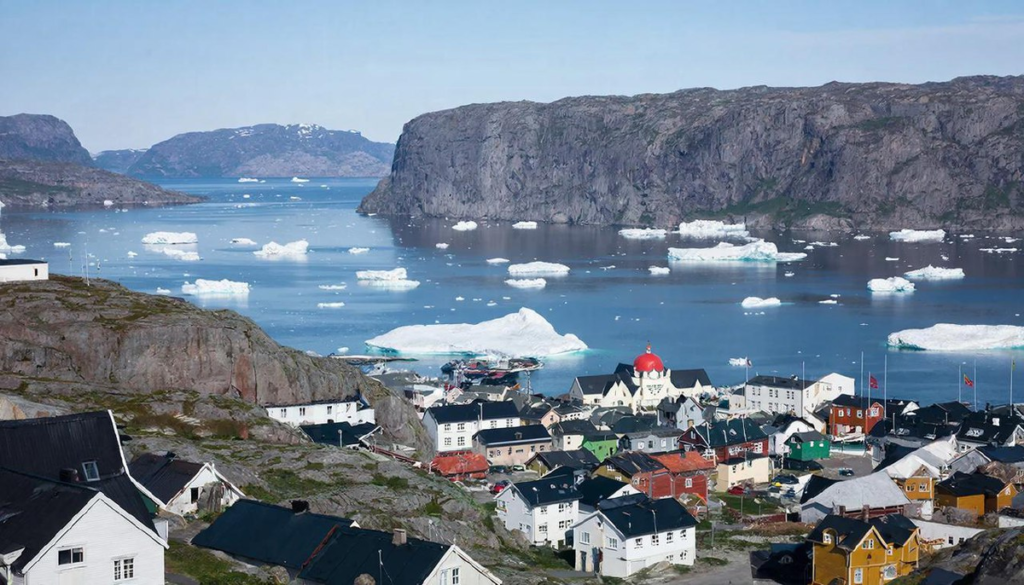
For several months, U.S. President Donald Trump has put Greenland at the center of global attention. He has threatened to bring the Arctic territory under U.S. control, provoking a sharp response from European leaders and Denmark, which administers Greenland as an autonomous region.
Trump’s interest is often attributed to the island’s strategic location. But there’s another key reason—rare earth metals. In today’s world, where every country is chasing them, Greenland cannot be ignored.
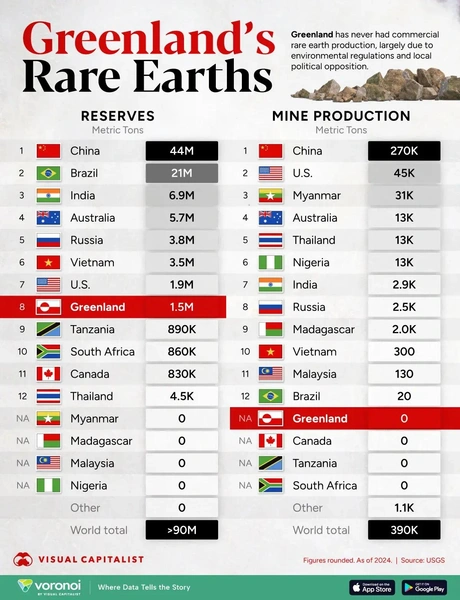
On January 19, 2026, visualcapitalist.com published an infographic showing how Greenland’s rare earth metal reserves compare with other countries.
What about the rest of the world?
China remains the backbone of the global rare earth market. In 2024, it produced approximately 270,000 metric tons, more than half of the world’s total.
China also controls the largest reserves, estimated at 44 million metric tons. This combination of scale and integration gives Beijing significant leverage over industries ranging from electric vehicles to defense systems.
Outside China, many countries with large reserves play a secondary role in production. Brazil, for example, has estimated reserves of 21 million metric tons but produces almost nothing today. Similar situations exist in India, Russia, and Vietnam.
Why Greenland Matters to the U.S.
Greenland’s estimated rare earth reserves (1.5 million metric tons) exceed those of countries like Canada and South Africa. Yet commercial mining has never taken place there. Environmental restrictions, infrastructure challenges, and local political opposition have slowed any development.
Trump’s interest in Greenland is therefore not just strategic. Rare earth elements are essential for advanced manufacturing, energy technologies, and military equipment. Since China dominates the global supply, U.S. policymakers are increasingly looking for alternative sources.
Ads on Thornhill Day text and link