
And how do scientists even know that?
Rivers may seem as old as the hills, but like all natural features, they have a life cycle. Many carve winding paths across the land before eventually drying up. Still, some rivers have survived far longer than others. So which river is considered the oldest in the world today?
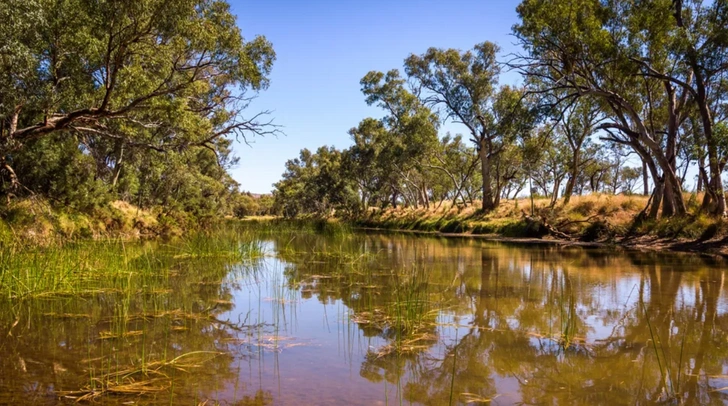
According to Victor Baker, a geomorphologist at the University of Arizona, the answer is older than the dinosaurs. It is Australia’s Finke River, known to the Arrernte people as Larapinta, and it is estimated to be between 300 and 400 million years old.
The river system stretches more than 640 kilometers across Australia’s Northern Territory and South Australia. Due to the continent’s arid interior, the Finke often dries up and for much of the year exists as a chain of isolated waterholes. Geological data, weathering profiles, and radionuclide measurements in surrounding sediments indicate that the river dates back to the Devonian or Carboniferous period.
One of the strongest pieces of evidence for its age is a geological feature known as transverse drainage. Instead of flowing alongside resistant rock formations, the Finke cuts directly through the MacDonnell Ranges in central Australia. This suggests the river existed before the mountains rose and slowly carved deeper as the land uplifted.
The MacDonnell Ranges (or Tjoritja in the Arrernte language) were formed as a result of the Alice Springs Orogeny—a tectonic mountain-building process that took place between 300 and 400 million years ago. This means that the Finke River is at least as old as these mountains.
As for the future, it is difficult to say how long the Finke will continue to exist. Many rivers in arid regions have changed significantly due to human water use.
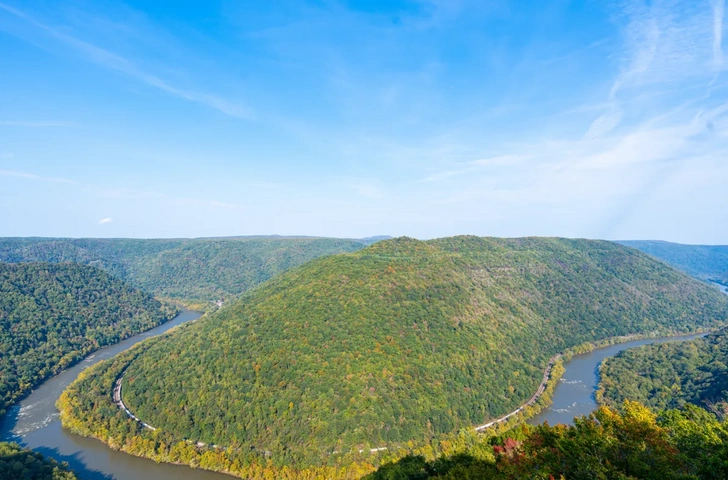
If the Finke River were ever to dry up, the New River would take second place. It is estimated to be about 300 million years old and flows through states Virginia, West Virginia, and North Carolina, USA.