On February 28, 2026, on the website Polymarket, a user with the nickname Magamyman bet $87,000 that the United States was about to strike Iran. And that is exactly what happened — just a few hours later. Magamyman earned more than half a million dollars from that prediction.
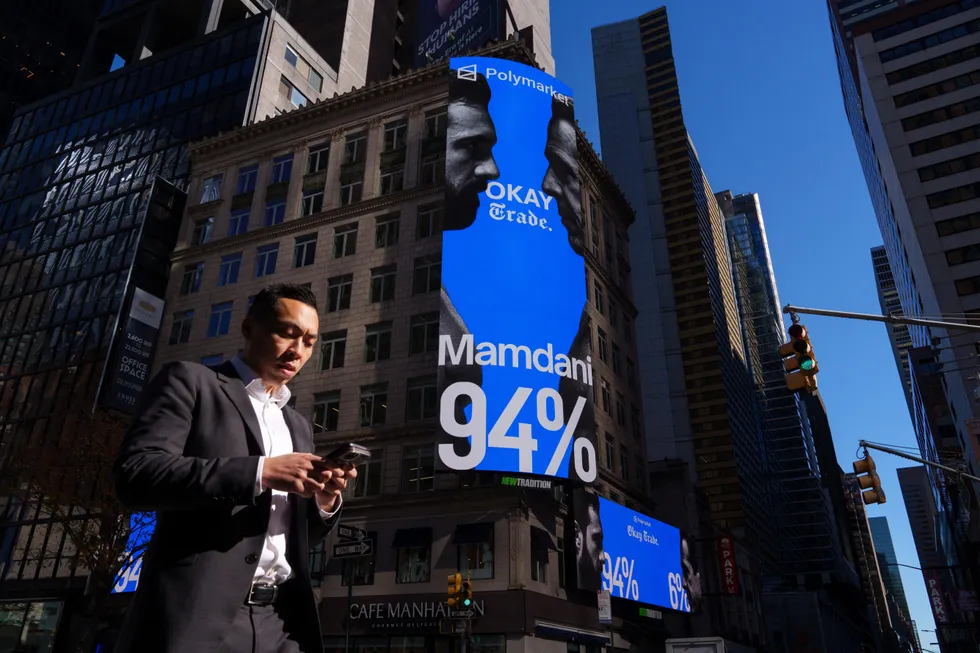
Polymarket is what’s known as a prediction market. There, you can bet money on almost anything. When will Russia and Ukraine reach peace? When will NASA fly around the Moon as part of the Artemis II mission? Should we expect the Second Coming of Christ in 2026? Thornhill Day explains how prediction markets work and whether it’s true that ordinary people’s forecasts come true more often than bookmakers’ predictions.
Prediction markets are not a new idea. It all started in the 1980s with U.S. elections
Prediction markets appeared back in the late 1980s. One of the first opened on a University of Iowa educational website before the 1988 U.S. presidential election. Users could predict the winner of the presidential race and win money from it. Those who predicted correctly received money from those who were wrong.
This is the main difference between prediction markets and traditional sports betting. Users play against other people, not against a bookmaker. Accordingly, the odds depend on the opinions of ordinary users, not on bookmaker analytics. That’s why prediction market participants call themselves “traders” and say “buy a contract” rather than “place a bet.”
The market on the University of Iowa website worked very simply: participants bet on whether a specific candidate would win or not. Purchased contracts changed in price depending on how many people made a particular prediction. For example, in the summer of 1995, people strongly believed Bill Clinton would win the election — and the price of a contract on his victory rose from 37.9 cents to 45.1 cents. The price of a contract on his defeat fell accordingly from 62.1 cents to 54.9 cents.
When Clinton eventually won, those who bought victory contracts for 45.1 cents received one dollar and earned 54.9 cents — from those who bet on defeat. Of course, you could buy more than one contract; the only limitation was market volume (that is, whether there were enough people willing to bet against you).
Since the 1980s, prediction markets have not changed much — they are still platforms where users bet on binary events (usually “yes” or “no”). On most platforms, the total value of two contracts still equals one dollar, and the losers’ money goes to the winners.
The most popular platforms today are Kalshi and Polymarket
Today, the two most popular prediction market platforms are Kalshi and Polymarket. In 2025, about 95% of all prediction market bets went through them. Polymarket was founded in 2020 by American Shane Coplan — from his bathroom, which he converted into an office. Before that, at 19, Coplan dropped out of the prestigious New York University and unsuccessfully tried to build a career in the crypto industry. By October 2025, thanks to Polymarket’s success, Coplan became the youngest self-made billionaire in history.
Kalshi was founded in 2018 by Brazilian Luana Lara together with her classmate Tarek Mansour when they were both studying at MIT. In 2019, the company was accepted into the famous American startup incubator Y Combinator, and the project officially launched in 2021 after Kalshi received regulatory approval to operate in the United States. By the end of 2025, Lara became the youngest female billionaire in the world.
Right now, on Polymarket, you can bet on whether the regime in Iran will fall by June 30, whether Arsenal will win the English football championship, and whether Russia and Ukraine will reach a ceasefire by the end of 2026. The platform estimates the probability of the last event at 35% — meaning those who bet 35 cents on a ceasefire would earn 65 cents if it happens.
Markets on the platforms are opened by special teams, but any user can propose a market idea, which may be published after moderation.
Can you bet on any event?
Kalshi requires full identity verification with official documents, and contracts can be purchased with a bank card. On Polymarket, however, to start “trading,” you only need to connect a cryptocurrency wallet.
Kalshi earns money from a small commission (about 5% of the contract purchase amount). Until recently, Polymarket charged no commissions and relied on investor funding. The first commissions appeared in early 2026 for users of the American app and for “15-minute markets.”
Besides Kalshi and Polymarket, dozens of smaller prediction market platforms exist. For example, the American financial company Robinhood also introduced prediction markets. DraftKings, an American sports betting company, also launched prediction markets. The service Noise allows users to bet not on events but on trends — for example, whether an idea or meme will become popular.
Prediction markets became especially popular thanks to Trump
Kalshi and Polymarket were not the first prediction platforms, but their predecessors were not very popular, largely because U.S. regulators actively fought prediction markets in the 2010s.
For example, the large Irish company InTrade shut down in 2013 after the U.S. Commodity Futures Trading Commission sued them for violating U.S. law. According to the commission, the platform functioned as an unregulated exchange, which is illegal in the United States.
Under Joe Biden, regulators continued to closely monitor prediction markets. Due to regulatory pressure, in 2022 Polymarket had to ban U.S. citizens from registering on its platform.
Kalshi, unlike its main competitor, fought for legal status in the U.S. from the beginning. The company spent years in court with the Commodity Futures Trading Commission and finally won in 2024. A U.S. court essentially recognized Kalshi as a real futures exchange, not a bookmaker engaged in illegal betting.
Are prediction markets allowed in Europe?
With Trump’s return, legal conditions for prediction markets in the U.S. became much more favorable. In September 2025, Polymarket was unexpectedly allowed to return to the U.S. market — the Commodity Futures Trading Commission officially dropped all cases against the platform.
This was likely part of Trump’s broader pro-crypto policy. Another possible reason for the administration’s favorable attitude toward prediction markets is his son: in 2025, Donald Trump Jr. became an advisor to both Kalshi and Polymarket and also invested his fund’s money into Polymarket.
In 2025, prediction markets rapidly grew in popularity. Financial analyst Barry Jonas believes the most active users are young Americans aged 18–20. In many U.S. states, people under 21 cannot use bookmaker services, but prediction markets are not legally considered bookmakers, so any adult can register.
Some young people even make betting on prediction platforms their main job, especially former finance sector employees under 30.
Prediction market quotes are now used in news analytics
Kalshi partnered with CNN and CNBC in 2025. CNN uses probability graphics from Kalshi in live broadcasts and political analysis. CNBC uses them for business analytics.
Polymarket became an official partner of Dow Jones (owner of The Wall Street Journal) and Yahoo Finance.
The National Hockey League also signed contracts with both companies — their odds will be shown during broadcasts.
Insider trading problem
Prediction markets also face insider trading issues. For example, in January 2026, hours before U.S. forces captured Nicolas Maduro, an anonymous Polymarket user bet $32,000 that Maduro would be overthrown before the end of January and earned more than $400,000.
Both Kalshi and Polymarket officially prohibit insider trading, but in practice they rarely catch such users. Real stock markets strictly punish insider trading, but prediction markets fall under a different regulator with fewer resources to monitor suspicious activity.
Prediction markets and governing countries
Economist Robin Hanson proposed the idea of “futarchy” — a system where prediction markets determine which government policies will be most beneficial. Citizens would literally vote with money for or against proposed reforms.
Hanson believes prediction markets encourage people to search for information and make informed decisions because they risk their own money.
This idea is related to the “wisdom of the crowd” theory, which suggests that the opinion of many people is often more accurate than that of individual experts.
Can prediction markets really predict the future?
Not everyone agrees. Critics point out that wealthy individuals can manipulate odds simply by buying many contracts. This could lead to media covering not the most important events but the ones with the most money bet on them.
Many also question the ethics of prediction markets. People can bet on wars, epidemics, deaths, and disasters. Critics argue this turns tragedies into financial instruments.
Prediction markets can also encourage manipulation and fake news. There have already been cases where people tried to influence news reports to win bets.
As U.S. Senator Chris Murphy said about prediction markets:
“This is American immoral commerce on steroids. When events involving good and evil become financial products, it becomes impossible to tell what is right and what is wrong. People should not want others to die just because they placed a bet.”