
Life in the deep sea is harsh and unglamorous. Resources are scarce, and the few creatures that live there must fiercely compete for every scrap of food.
It’s no surprise that even relatively small deep-sea fish grow enormous fangs, develop venomous spines, deploy extendable jaws, and acquire other features worthy of true sea monsters. Thornhill Day presents 12 of the most terrifying inhabitants of the ocean depths.
- Johnson’s Anglerfish (Melanocetus johnsonii)
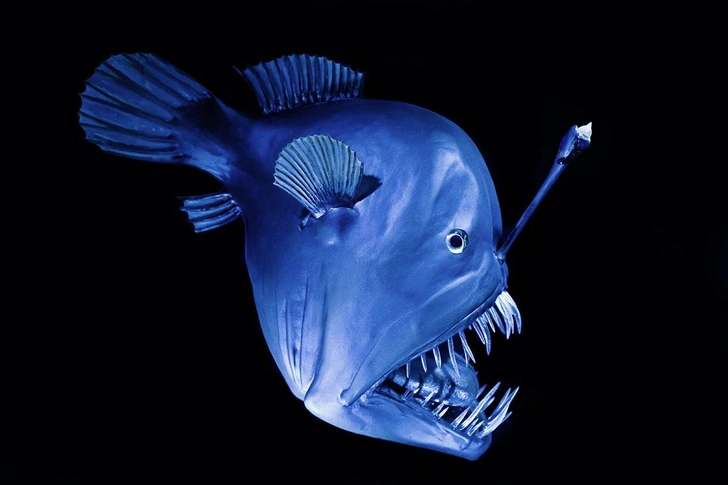
These ambush predators could be called the “most attractive” residents of the dark depths. They lure prey with a fishing-rod-like appendage tipped with a glowing organ filled with symbiotic bacteria.
The image shows a female — males are several times smaller. In many related species, males become tiny parasites that attach to the female and receive all necessary nutrients from her. Johnson’s anglerfish males, however, retain some independence and can live on their own.
- Pacific Viperfish (Chauliodus macouni)
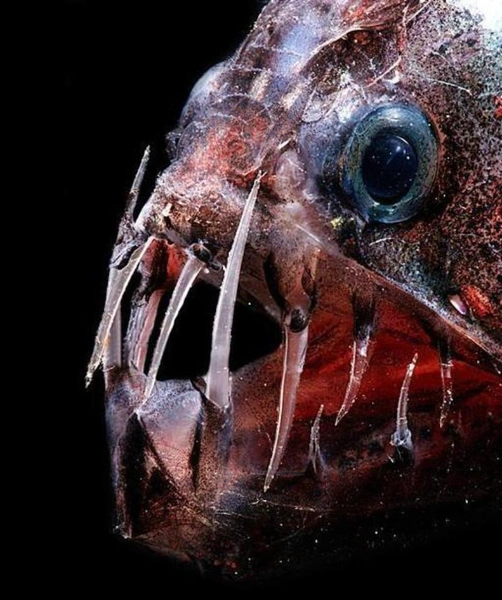
These lovers of darkness rise toward the surface only at night, spending most of their lives several kilometers deep. Their bioluminescent organs form glowing bead-like patterns along the body.
The luminous display is thought to help them find mates and warn other predators that this is not an opponent to mess with.
- Black Swallower (Chiasmodon niger)
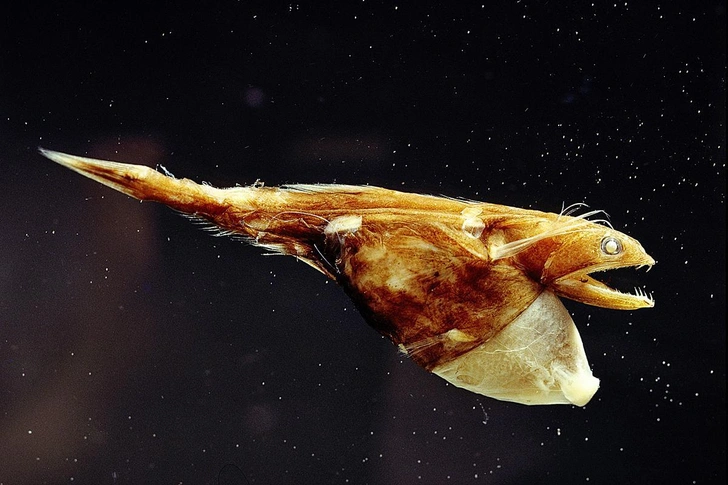
Food is scarce in the deep ocean, so the ability to store it can be invaluable. Swallowers are famous for this — their stomachs can stretch enough to hold prey twice as long as the fish itself and up to ten times heavier.
- Ferocious Bathysaurus (Bathysaurus ferox)
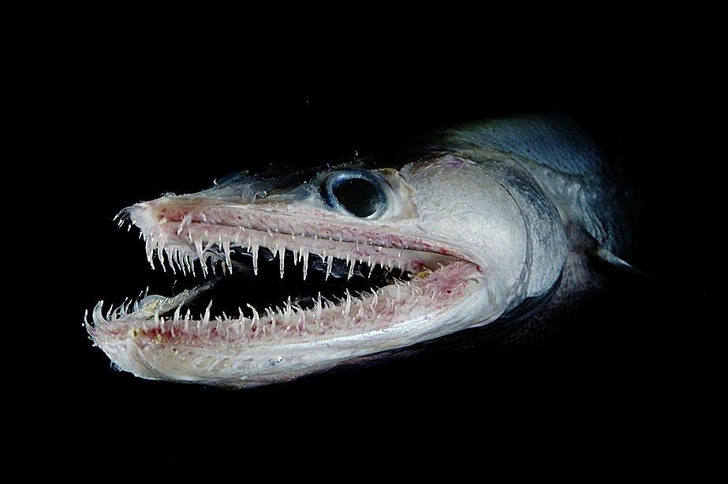
Bathysauruses (“deep lizards”) get their name from their horizontally flattened heads, which resemble reptile skulls. They’re called ferocious for good reason: at depths of 1–3 km, these bony fish have virtually no natural enemies and will attack almost any moving object.
- Fangtooth (Anoplogaster cornuta)
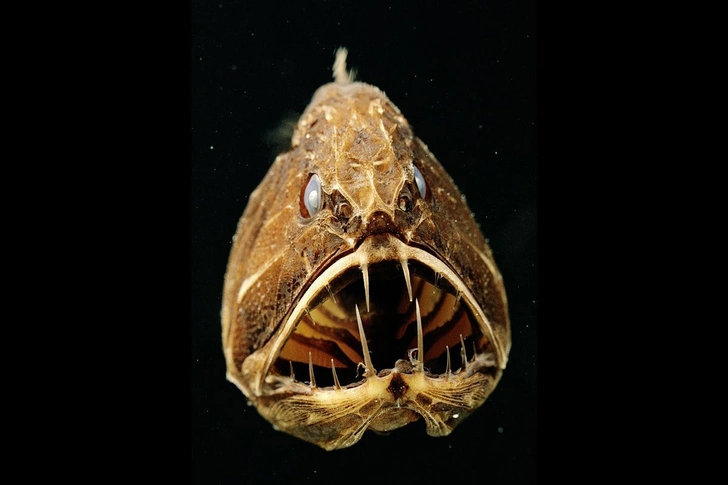
The fangtooth is often considered the most frightening-looking animal in the world. Its disproportionately large, heavy head with small eyes is armed with an array of terrifyingly sharp fangs.
Juveniles live closer to the surface and look so different from adults that for more than a century they were classified as a separate species. Only in the mid-20th century did scientists discover that they descend into deeper waters as they age, transforming into ruthless, sharp-toothed predators that hunt in small groups.
- Stargazer (Uranoscopus)
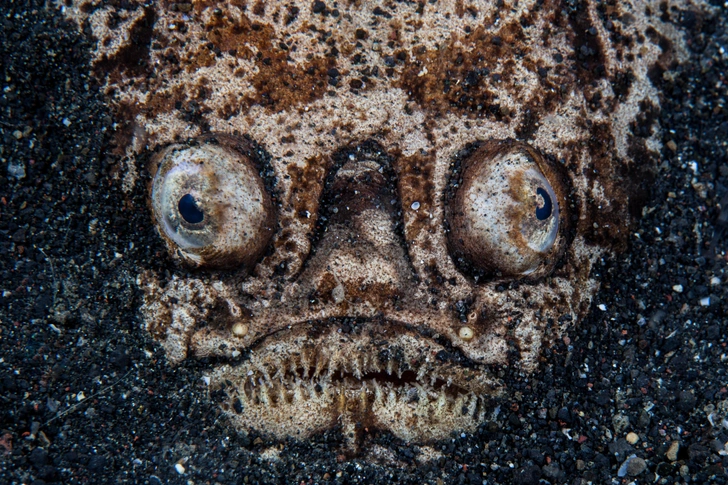
These bottom-dwelling hunters lie buried in sediment, exposing only a pair of watchful eyes that seem to stare upward. Their romantic appearance is deceptive: stargazers are armed with powerful, often venomous spines, and some species can even deliver electric shocks.
- Sloane’s Viperfish (Chauliodus sloani)
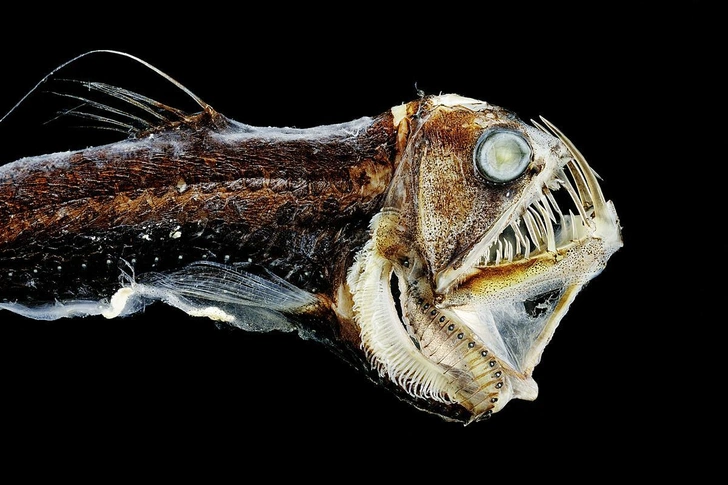
These fish are relatively small, rarely exceeding a few dozen centimeters in length, but their teeth are enormous. Their long, razor-sharp front fangs allow them to deal devastating slicing blows, even to large prey. Because the teeth are fixed in place, viperfish must open their jaws nearly 90 degrees to swallow sizable victims.
- Frilled Shark (Chlamydoselachus anguineus)
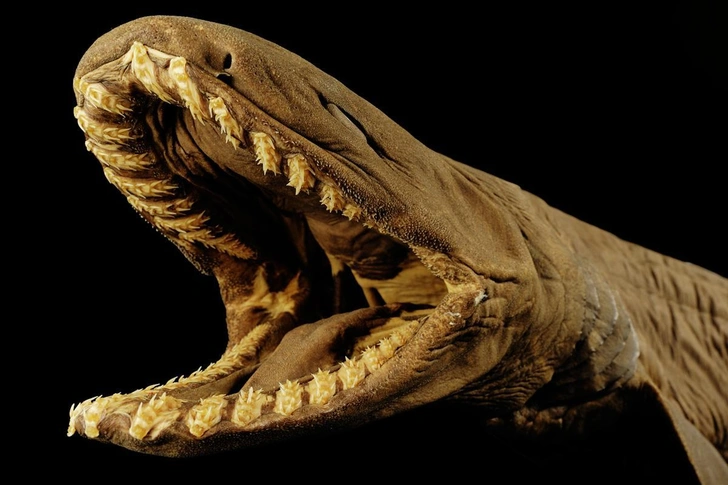
Long and eel-like, this cartilaginous fish has an astonishingly ancient lineage. Frilled sharks belong to a line that emerged at least 95 million years ago — possibly even earlier, during the Jurassic period.
- Pelican Eel (Eurypharynx pelecanoides)
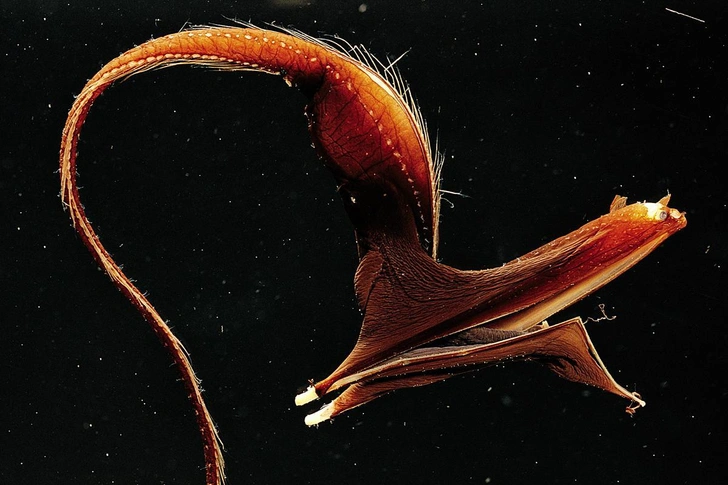
This gulper eel grows to over half a meter in length, with nearly a quarter of that being its enormous head and expandable mouth, capable of engulfing large prey. A red bioluminescent glow sometimes flashes at the tip of its flexible tail to attract victims. Its small teeth suggest it mainly feeds on soft-bodied cephalopods.
- Longnose Chimaera (Harriotta sp.)
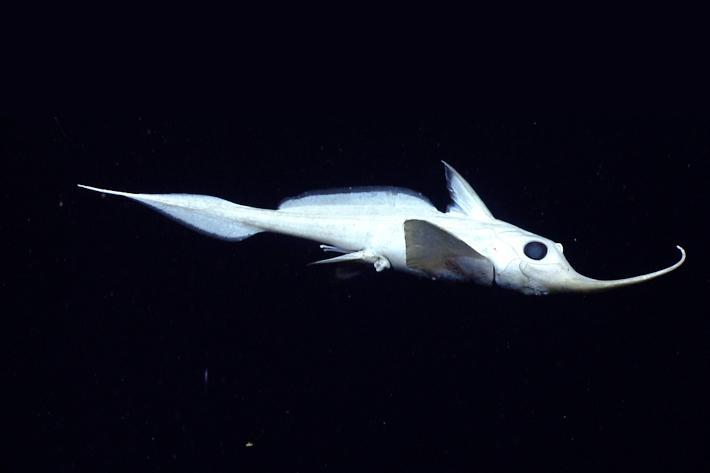
Unlike the frilled shark, chimaeras can clamp their jaws with tremendous force, easily crushing mollusk shells. They also possess a large venomous spine on their back, while their elongated, sensitive “nose” helps detect prey even in complete darkness.
- Monkfish (Anglerfish) (Lophius piscatorius)
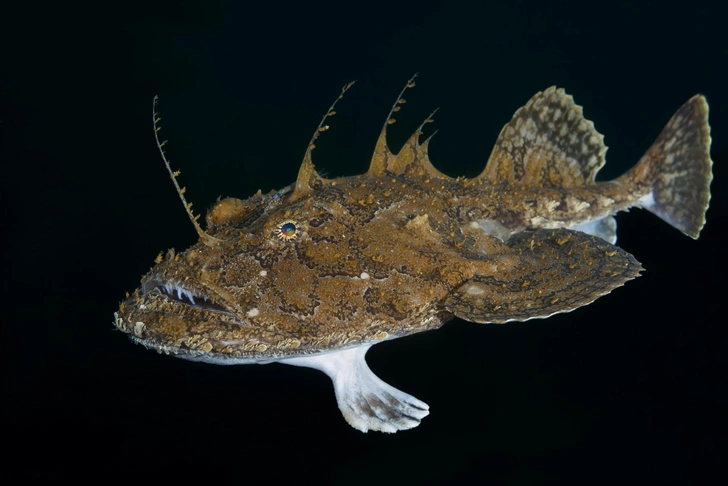
This ambush predator buries itself in the seabed, exposing only its “fishing rod” to hypnotize prey with the twitching lure at its tip. Once the curious victim approaches, the monkfish lunges forward, pushing off with its powerful front fins.
- Goblin Shark (Mitsukurina owstoni)
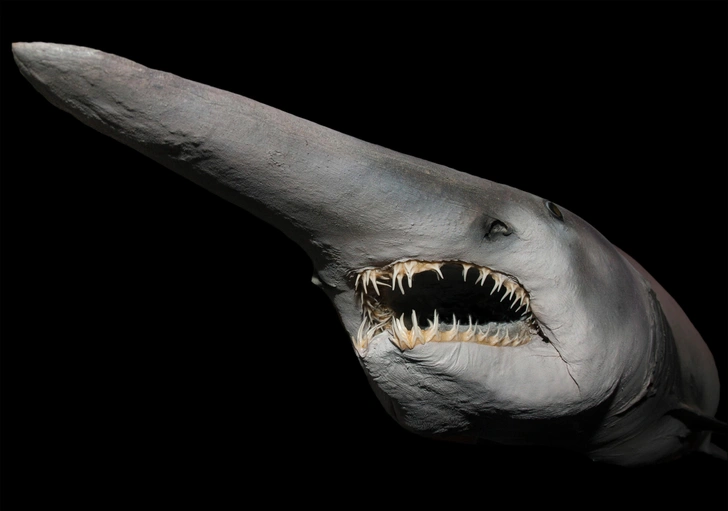
Through the semi-transparent skin of the goblin shark, blood vessels are visible, giving it an unusual pinkish hue. Even more striking are its jaws: they can shoot forward almost to the tip of the shark’s long, sensitive snout, then snap shut, pulling in water — and anything caught within it.
June 8 is World Oceans Day